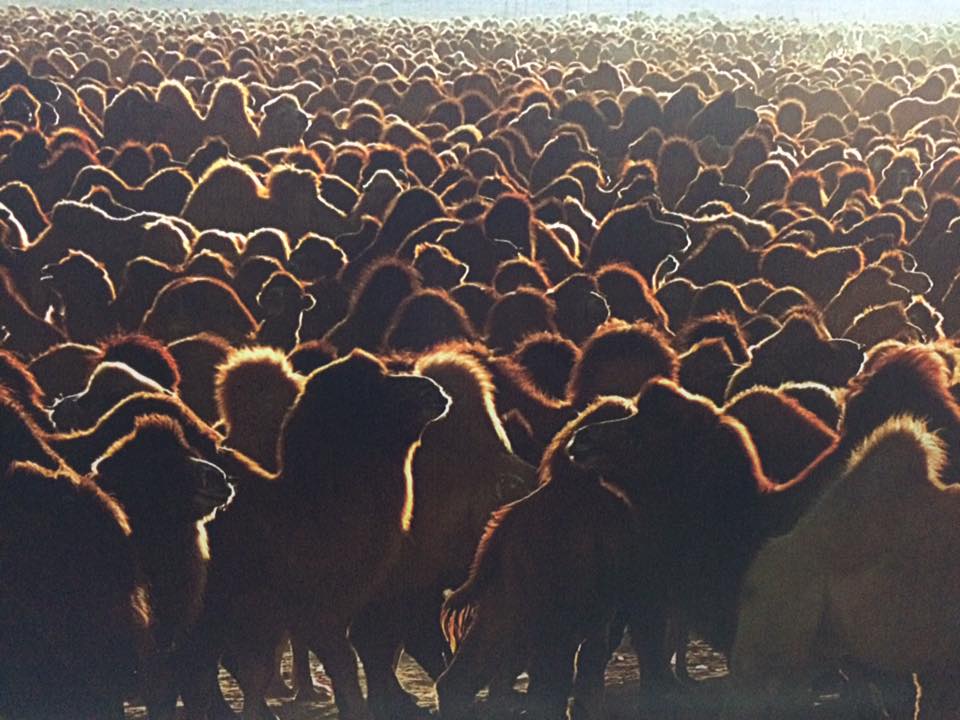
Camel~ One of All Animals
Camel is the composite of all domestic animals with respect to its characteristics. Camel produces milk like the cow, fats like sheep, hair like the goat, riding like the horse, thick milk (Bactrian camel) like yak, work like the donkey, and hardy like mule etc. Every product of camel is useful, even urine and manure are valuable for medicinal use and paper production respectively. The camel’s manure is a rich source of soil fertility and bulky fiber for softening of the soil. Camels’ Manure~From Waste to a Worthwhile Farming Agent.
The Camel is Transforming into a Dairy Animal in other Continents
The quest for camel milk in different parts of the world is resulting in the materialization of the modern camel farms even beyond the camels’ original habitat. The primary purpose of such farms is the milk production. The Camel Journey ~ Some More Portrait Information from Australia. The camel milk is unique, health friendly and perform a majical role in the complicated health aspects. .Detailed Nutritional Composition of Bactrian Camel’s Milk 
The Only Animal Domesticated for Milk
Camel was originally domesticated for its milk production in harsh and hostile ecosystems of the dry barren lands of Arabia. Later on, the trait of walking ability was the major selection criteria to use this precious animal for long travels. The camel is once again turning to its original task and becoming a modern but sustainable farm animal. The high yielding camels are selected and evolved for dairy traits, attracting higher prices as there is un-matching demand for milch camels, especially in Gulf countries. A race for hunting high yielders is already started among the camel lovers in the region and new and modern camel dairies are emerging, the best examples are the 2 giant camel dairies in the United Arab Emirates. Different types of dairy products like ice cream, powder milk, camelchino, pasteurized milk, and other product are now available for the consumers in the region.

The Challenges in Modern Camel Farming
The modernization and intensification of modern camel dairying have brought many challenges too, which need to be addressed properly with the blend of traditional knowledge and modern science. Such modern challenges are comprised of breeding records and traits selection, camel adaptation to the modern technology especially milking parlor, mastitis, manage and other challenges.
Conclusion
There is immense need of experience sharing, technology transfer, knowledge management and the introduction of new ideas to keep modern camel dairying sustainable. I have no doubt that camel will find its original place as a dairy animal of the dry ecosystem of the world. Camel has a great potential to produce in the harsh climatic conditions without providing extra care in kind of cooling or heating systems. Camel milk will bring a smile to millions of people as health promising natural pharmacy and will promote good health.Superfood (Camel Milk) can Beat the Challenge of Superbug (Bacterial Resistance to Antibiotics)
The centuries-old tradition (healing with camel milk) is now supported by scientific findings gained in different quarters of the world. The camels’ pastoralists of Asia and Africa use camel milk as a natural pharmacy for different and complex ailments and such practice still, prevails among them. They use camels’ milk (CM) for the different complex ailments like hepatitis, joint problems, obesity, ascites, weaker eyesight, body aches and much more.

CM is successfully used for the treatment of hepatitis among different communities, even it is now used in urban areas of the world. Not only Traditional Knowledge (TK) but the religious sayings also supported such use of CM. According to a Hadeeth, Prophet Muhammad (PBUH) advised camel milk for the treatment of water belly (ascites) in Madina. There is very famous Hadeeth regarding the use of camel milk for the treatment of hepatitis.

Modern science and medical research also proved the importance of camel milk in human health. Famous US physician Dr. Hinkle has been very pleased with the results she is seeing with hepatitis on the camel milk. She has witnessed case after case of hepatitis patients whose liver enzymes have been normal for the first time in years while on the camel milk.
Alla et al (2011)1 conducted research on camel milk in connection with the liver enzymes of hepatitis patient. They concluded that camel milk can be used as an herbal remedy for the treatment of alcoholism and other liver diseases which affect the hepatic enzymes as well as the liver tissues. Yagil (2004)2 stated that camel milk is very effective in fighting viruses. Viruses can also be neutralized by blocking out their enzyme activity, and studies have shown that camel antibody is an effective inhibitor of hepatitis enzymes system. Other studies conducted by Middle Eastern Scientists on the role of camel milk, revealed that camel lactoferrin was demonstrated a remarked in-vitro ability to completely inhibit the Hepatitis C Virus (HCP) entry into PBMC, hepG2, and replication inside those cells system (Esmail,2008). Such changes help in safeguarding the body from this killer virus.

The CM is a silver lining in the clouds for those who face liver dis-functioning. The scientific support for CMs’ potential is an additional asset which helps in convincing people with urban and academic backgrounds and asks for scientific proves. It is now pretty sure that CM turns the complexity into simplicity and makes the life easy and joyful. I hereby suggest those who have liver ailments and other complications to using camel milk for better health and a happy life.
References;
- Alla et al; 2011. Sudanese Journal of Public Health, Vol 6 (4) Esmail; 2008. Hepatitis Monthly; 8(2) 101-109
- Yagil; 2004. Camel Milk and Autoimmune Disease. Historical Medicine
<strong>Author:
<a title=’Dr Abdul Raziq’ href=’http://www.articlesbase.com/authors/dr-abdul-raziq/825282′>
Dr Abdul Raziq</a></strong><br /><p>Camel has adapted mechanisms that allow it to withstand prolonged water deprivation, high temperature, especially in the absence of readily available water, and survive when feed resources are scarce or of poor quality. Heat tolerance is in part due to its\’ ability to minimize water loss. The camel retort to hot arid conditions by reducing urine production, absorbed urine, sweating economically, by an increase body temperature and by the ‘storage\’ of CO2 and glucose in the muscles. Camels can survive up to 14 days without water and can tolerate water losses of up to 30 A camel may drink more than a third of its body weight as it rehydrates.</p>
<p>In terms of actual water intake, camel drinks 200 to 220 L in 3-10 minutes. In other animals rehydration at these levels would lead to over hydration and possible death. The camel is able to do this as large amounts of water can be stored for up to 24 hours in the gut to avoid a rapid dilution of the blood. The camel\’s kidneys play a major role in the process of conserving water, having strong capacity of water reabsorption and excretion of very concentrated urine</p>
<p>The camel\’s blood plays a principal role in adaptive mechanisms to high heat burden and dehydration as its composition and volume remains relatively constant and hemoglobin function remains normal. The erythrocytes of the camel are oval shaped and non-nucleated which resist osmotic variation without rupturing; these cells can swell to twice their initial volume following rehydration. Another unique feature of the erythrocytes is their long life span when the camel is dehydrated. The life span of the erythrocytes of hydrated camels is 90 to 120 days. When camels were chronically dehydrated during summer (40oC mean during day; 20oC mean at night) the life span of erythrocytes was extended to 150 days. Erythrocyte turnover is water and energy expensive. Therefore extending the life span of erythrocytes reduces energy and water expenditure</p>
<p>A fully hydrated camel has a diurnal body temperature range of 36 to 38oC. However when dehydrated and exposed to high environmental heat load body temperature may fluctuate by 6 to 7oC, from approximately 34 to 41o C. The increase in body temperature of camels exposed to high heat load, especially following a 2o C reduction below the normal minimum, is advantageous because it allows a considerable amount of heat to be stored during the day and dissipated at night (by radiation) without the expenditure of water. Furthermore, as body temperature increases the temperature gradient between the camel and the external environment is reduced, and again water use is reduced. The camel has a bi-phasic air flow pattern, i.e. the inspiratory and expiratory flow rates through the nasal turbinate are similar. The bi-phasic breathing pattern also reduces water use.</p><p>Article Source: <a href=’http://www.articlesbase.com/environment-articles/camel-an-incredible-creature-in-difficult-environment-5703501.html’ title=’Camel, an incredible creature in difficult environment’>http://www.articlesbase.com/environment-articles/camel-an-incredible-creature-in-difficult-environment-5703501.html</a></p><strong>About the Author</strong><br /><p>Being the president of the Society of Animal, Vet. and Environmental Scientists (SAVES), I am working on the issues of dry lands and indigenous livestock breeds with respect to climate change scenario. Author had been working with the pastoral people for last 10 years, while characterizing and documenting livestock breeds and indigenous knowledge, especially related to camel. Ahthor had been delivering training to the livestock keepers in remote for vaccination, drenching and other valuable practices. I am the author of the indigenous livestock breeds, livestock production systems of the tribal people and indigenous knowledge in Balochistan province, Cholistan and Thar Desert of the Great Indian Desert. He had been traveling with the Afghan nomads (Kochis) to work and document on indigenous knowledge and livestock breeds/husbandry.</p>
<p>Author organized camel scientists and herder in Pakistan and founded Camel Association of Pakistan. I am PhD in camel science and presented many international research presentations at various occasions.Dr Abdul Raziq had visited many countries and research stations.</p>