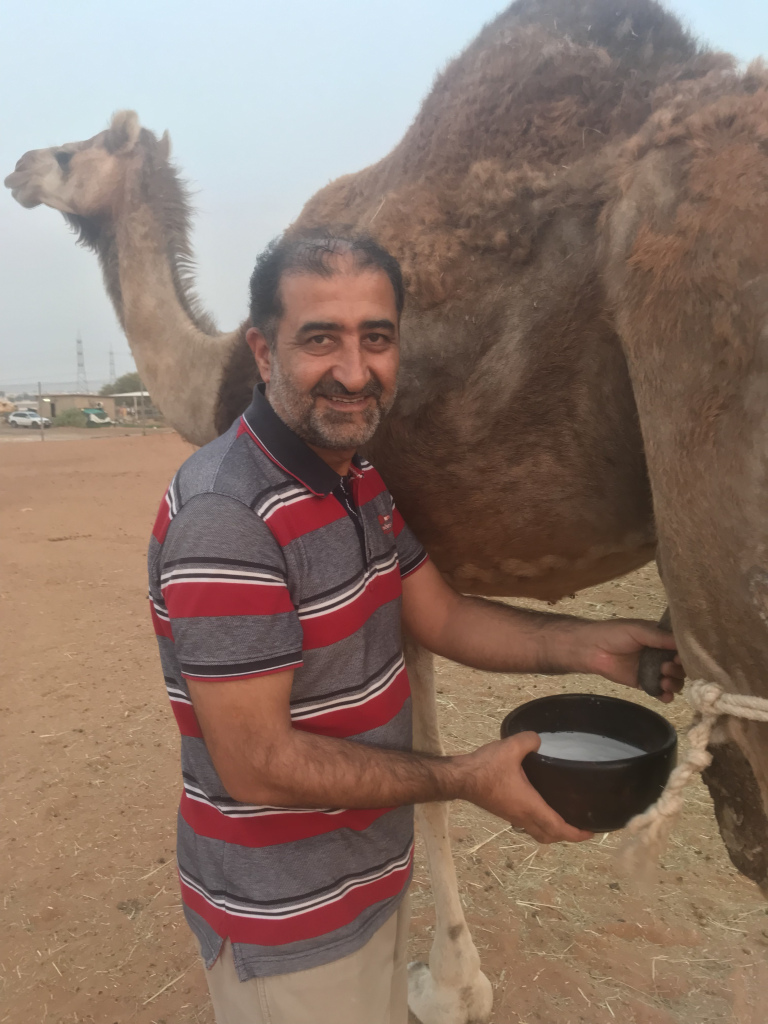
Dr. Aboul Raziq Kakar is a Doctorate in Animal Science with a specialized focus on dromedary camels as a sustainable dairy animal. With a career dedicated to unlocking the potential of camels as a solution to food security under climate change challenges, Dr. Kakar has been actively working in this field since 1998. Over the decades, he has established himself as a leading expert in camel dairying, combining academic rigor with extensive hands-on experience.
Since 2014, Dr. Kakar has been exclusively associated with the world’s first commercial camel dairy, Al Ain Camel Dairy in Abu Dhabi, UAE, where he has further refined his expertise in camel milk production, farm management, and sustainable practices. His work is driven by a vision of the camel as a miraculous biological model, uniquely adapted to thrive in the face of a warming planet while producing nutrient-rich milk and meat that promote human health.
Dr. Kakar’s expertise spans a wide range of areas, including camel dairy traits, breeding goals, nutritional requirements, calf rearing, housing systems, future planning, camel milk marketing, and the management of profitable and sustainable camel farms. He provides global consultancy services to establish and develop camel dairies that are both economically viable and environmentally resilient.
In addition to his work in camel dairying, Dr. Kakar has made significant contributions to ecological and eremological (desert ecology) studies. He has extensive experience in rehabilitating livestock ecosystems, particularly in arid and degraded environments, to restore ecological balance and productivity. His work focuses on integrating traditional knowledge with modern scientific approaches to address challenges such as overgrazing, desertification, and climate change.
Dr. Kakar’s deep connection to nature and his unwavering belief in climate change adaptation and sustainability distinguish him from his peers. He has documented the production potential of native livestock breeds, including two camel breeds (Kohi and Raigi), under climate change scenarios, highlighting their resilience and adaptability in harsh environments. His research underscores the importance of preserving biodiversity and promoting sustainable livestock practices in the face of global environmental challenges.
As an advocate for sustainable livestock production, Dr. Kakar has developed innovative solutions to complex ecological problems, particularly in arid and semi-arid regions. His work not only advances the role of camels in addressing food security and environmental sustainability but also contributes to the broader understanding of desert ecosystems and their rehabilitation.
Dr. Kakar’s holistic approach, combining ecological restoration, eremological research, and sustainable livestock management, reflects his commitment to creating a harmonious balance between human activity and the natural world. His efforts continue to inspire and guide the development of resilient agricultural systems in the face of a changing climate.
More than anything, our own defense system (immune) against infections is more important. We can revitalize and energize our immune or defense system by some good steps if taken properly. Such steps are;
Taking special food which could be rich in certain nutrients, boosting our defense system
Proper physical exercise
Good sleep with the quality and duration
Turning off the stress machine of the body
The camel milk is the only and unique food that can help you in all the above 4 important steps Camel milk is rich in special molecules like lactoferrin, Lysozyme, Vitamin C, lactoperoxidase, and immunoglobulin which boost our immunity. Camel milk is fortified with a special quantity and composition of minerals that provide a fine balance of acid-base in the body, revitalizing our body and minimizing stress-producing hormones. Camel milk provides calmness because of its very positive impact on our hormonal system which triggers our sleep, resulting in very good and deep sleep. The nutrients richness of the camel milk helps in revitalizing our bodies, giving us special power for a longer and better exercise. Camel milk is free of allergen proteins and intolerant lactose, good, and suitable for all family members. With a unique composition, camel milk helps in stress control So, please give a chance to the camel milk, bring it into your food chain, and enjoy a quality life.
A camel researcher and colleague from Spain is looking for technical support regarding the revalorization of the Canarian camel breed. Below are his letter and email contact.
My name is Carlos Iglesias Pastrana. I am actually developing my Ph.D. thesis in the Department of Genetics, Faculty of Veterinary Sciences, Córdoba (Spain). It is focused on the functional revalorization of Canarian camel (Camelus dromedarius), an autochthonous endangered camel breed and the only genetic resource of such nature in Spain and Europe. This research project is framed in the financing framework of the international project CA.RA.VA.N – “Toward a Camel Transnational Value Chain”.
Within its main objectives, the ethofunctional characterization of this camel breed includes the enhancement of a composite ethogram for camel behavior (facial and body), which will be further complemented with ridden camels to test these facial and body expressions during camel gaits performing (since the last third of the XX century, Canarian camels have been relegated for touristic/leisure activities). In this way, an ethogram for whole-camel behavior would be standardized for early diagnosis of camel suffering and, consequently, handling practices correction/improvement and therapeutical follow-up.
For this purpose, I am looking for an alternative way of detecting pain in camels by facial expressions, using still pictures. It is expected to define objective criteria for detecting/evaluating camel suffering by collecting such information/interpretations from camel experts/breeders/researchers on online surveys.
If you are familiarized with camels and their behavior and you want to participate in these preliminary projects, please let me know by answering this e-mail (“I would like to participate”) and I will send you the whole pictorial material and surveys.
I will be so pleased if you could send this e-mail to people working with camels and familiarize themselves with their behavior; but also to those who are not familiar with camel behavior but with other animal species’. This is so important as we will be able to analyze if people not familiar with camels but specialized in animal behavior could be easily trained for evaluating pain in camels.
Many thanks for your participation!
King regards,
Carlos Iglesias Pastrana
Ph.D. candidate
Department of Genetics, Faculty of Veterinary Sciences, University of Córdoba, Córdoba, Spain
Camel milk is not only safe but gives you vitality and natural support in coping with the health emergency, the COVID-19. For the last few days, I have been noticing some rumors circulating on social media narrating to avoid camel milk in COVID-19 emergency. As an official statement from the camel milk community, I hereby reject such false assumption and ask you to please take camel milk as a safe and healthy food as usual. Also, those who are not on camel milk or have no experience with the camel milk should come to this rich food.
Here are some key reasons why you should take camel milk not only as a food but as a very rich and naturally fortified bar. The camel milk (CaM) strengthens and revitalizes your body because of the following reasons.
a. Making you stronger and naturally Immunized: CaM is rich with super molecules like lysosomes, lactoferrin, Vit. C etc, helping in strengthening the body defence system. https://camel4all.info/index.php/about/camel4milk/
b. Biochemical Balance: Due to its unique composition and super balance of minerals, vitamins, fatty acids, and amino acids the camel milk provides a very healthy biochemical balance to the body. Such a good biochemical balance provide a medium for effecient physiological performance inside the body.
d. Hormonal Calmness: The camel milk enhances the performance of the endocrine system in the body because of its nutrients, and its balance, which lead to a superbalance of the hormones. Such balance minimizes the shocks of the stress and strokes.
f. Antiinflamatory effect: Because of its special micronutrients (nanobodies), camel milk enhances the performance at cell and tissue level which helps in effecient metabolism.
g. Boost natural secretion: The camel milk boost the production of natural secretions and enzyems inside the body. Such secretions act as laxative, washing/flushing body, lowering load of oxidents and poisonous residues which ultimately help in keeping the body performance very good and effecient.
e. Helping hand in good sleep: The above mentioned performance of camel milk in the body boost and revitalize the body and help in a very good and deep sleep.
Camel milk forth is an appealing moisturizer. Look how an expert explains in this video about the importance and application of the camel milk forth or foam? Camel milk is very rich with supermolecules, capable of healing and revitalizing our skins. It can protect one from the sunburn and dry and chilling winds’ effects.
The French Camel Federation is organizing the second edition of the International Camel and Camelid Show on 19 and 20 September 2020 at the historic and prestigious Château de Grosbois in Boissy-Saint-Léger in the Greater Paris area.
The poster of the camel show in France
100% Camelids from France and Europe! With its 16,000 visitors in 2019, the Show has established itself as the reference in the sector. Federating institutional and professional, the Show brings together amateurs, professionals, sportsmen, and lovers of camelids.https://www.ffcamels.com
I do not claim it (camel milk) as the replacement of the breastmilk, but the closest in composition and activity, the camel milk is one of the most important food for infants after the mother milk. It has more water, lower but friendly lactose, free of protein allergies and rich with iron, making it the second-best choice after the breastmilk.
Camel milk is the closest you can get to a human mother’s milk, with 10 times more iron and three times more vitamin C than cow’s milk. It is antibacterial and low in lactose. Used medicinally by nomadic communities for centuries, fermented camel’s milk is still popular in Kazakhstan as a treatment for Tuberculosis and for HIV/AIDS in Kenya and Somalia. Research has been conducted into treating Crohn’s disease, breast cancer, and autism, however, the most promising studies have been in the field of diabetes.
Please Respond with your Comments
A wide and diverse appreciation is ever-increasing about the role of camel milk as a natural health therapy. I suggest you please read point to point about the camel milk and support my cause with your suggestions and comments.
A recently published study by the National Veterinary School of Sidi Thabet, Tunisia and ICARDA suggests that camel’s milk offers a practical and sustainable resource to tackle widespread gastro-intestinal sheep worms in low input production systems.
Interest in Natural Healing Products
There has been growing interest in the use of natural products. “Natural products are an alternative source of bio-active compounds to control viral, bacterial and parasitic infections,” says Dr. Hafidh Akkari, a member of the research team in Tunisia. “Nutritional pharmacology is an important new research area for clean and sustainable livestock enterprises.” Milk is one option that has been considered since it has anti-parasitic properties and is also renewable, environmentally friendly, quickly degradable, easily accessible, and cost-effective
Camel Milk as Dewormer in Sheep
In addition to a detailed chemical analysis of the camel milk, the research team used two main tests to investigate the in vitro efficacy of camel milk against a common type of gastrointestinal parasite, Haemonchus contortus. This blood-sucking parasite of the sheep stomach can cause severe anemia and productivity losses; acute infestations and high worm burdens may even cause death in lambs. The effect of camel milk on egg hatching and adult parasite populations was impressive: camel’s milk was the only milk-type to have an inhibitory effect on egg hatching, and it caused significant paralysis or death of adult worms at different post-treatment intervals, even at low concentrations.
The Scientists Gave a Chance to the Camel Milk
This study is the first to conclusively show that camel’s milk could potentially help control the most important parasite affecting sheep,” says Dr. Mourad Rekik, a senior small ruminant production scientist at ICARDA, who collaborated in the study. “Given its in vivo effect and bioactive molecules, we believe that camel milk represents an accessible, renewable and cost-effective alternative to control parasites. Harnessed properly, it provides an opportunity to boost livestock productivity and raise rural incomes
Thinking out of the Box
Sometimes before I read the posts of the moms who are keeping their kids on camel milk for certain reasons, claiming that their kids are gaining weight and inclining from the skinny level to healthy levels. Even one mom told me that she found worms in the stool of her kid after the intake of camel milk. Therefore, I always say to give a chance to the camel milk. https://camel4all.info/index.php/2020/02/19/researching-camel-milk-as-an-antiviral-agent-in-the-context-of-covid-19/
For details, please go to the original post in the link below.
The abstract of the whole talk is based on a novel idea to study the repercussions of camel milk on the treatment and control of COVID-19. I’m quite confident that this idea will work and will save precious human lives in a short period of time. Camel milk boosts immunity, flush body from toxins & oxidants, and kills the microorganisms in the body. There are many valid reasons behind such claims and suggestions, which you can read in the following paragraphs.
CaM is a Natural Pharmacy
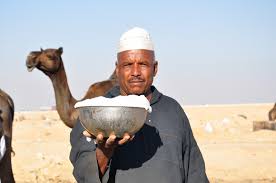
Camel is a strange and unique creature and the camel products are very exclusive, especially the white gold milk. Camel milk which I abbreviate as CaM has tremendous potential to naturally heal human bodies from different complex ailments and wash it from poisons. The power to heal complex ailments is coming from the specially designed molecules which work as natural medicine, hence CaM is known as a natural pharmacy.
The findings of different studies available in scientific literature revealing the role of CaM as a healing agent. CaM is fortified with special ingredients like protective proteins (lactoferrin, lactoperoxidase, immunoglobulins), micro microminerals, vitamins, and lysozyme, making CaM a super antidote against infectious diseases. CaM’s medicinal properties covering a wide range of ailments as; autoimmune diseases, allergies, asthma, rashes, diabetes, liver disorders, rheumatism, inflammatory conditions, piles, urethral irritation, infectious diseases, stress/depression, peptic ulcers, and even cancer.
Ongoing Studies
The miraculous potential of CaM is not claimed only based on the traditional knowledge and the novel molecules in its composition but many invitro and invivo studies have proved the worth of the CaM as antiviral, antibacterial, antifungal, anticancerous and supportive therapy in diabetes and other convoluted diseases. As for as I know, there are many ongoing and planned studies on CaM to understand the pathways of its mode of action and the diseases which can be treated/facilitated with the camel milk. The author is part of some studies thematic areas to study the awesome properties of CaM in human health. Very new updates are the emerging themes claiming CaM enriches the gut microbiome and enhance its healing power and the overall resistance of the body to different ailments.
Conclusion
As we are convinced that nature is perfect and provides solutions to complex situations, so the natural product like camel milk should be given a chance to study if it works against the COVID-19 virus or not. Nature has never unearthed a snag unless an antidote has not engineered within the natural resources. I strongly believe in this philosophy.
Camel milk is well known as a natural pharmacy and alternative medicine since unknown times. The traditional knowledge, the holy books, and the quotes of the distinguished personalities, all had had praised the healing power of the camel milk (CaM). https://camel4milk.wordpress.com/2014/10/31/5/
Modern Science Validates the Traditional Knowledge
The healing power of CaM recently proved and appreciated by the modern scientific findings. Many scientific studies have revealed that CaM is rich in vitamin C, protective proteins (lactoferrin, lactoperoxidase, immunoglobulins), micro microminerals and lysozyme, making it a super healing agent. Being rich with such noble nutrients, CaM is extraordinary in terms of antioxidative agents, antibacterial, antiviral, antifungal, making it a natural pharmacy for the complicated ailments, especially hepatitis (liver ailments)
A specific study (Alla et al, 2011) conducted to understand the function of camel milk in liver physiology revealed that CaM can be used as an herbal remedy for the treatment of alcoholism and other liver diseases which affect the hepatic enzymes as well as the liver tissues.
CaM Neutralizes Viral Activity in the Liver
The viruses causing hepatitis are neutralized by CaM, blocking out their enzyme activity, and the antibodies are effective inhibitors of hepatitis enzymes system (Yagil, 2004). Other studies conducted by Middle Eastern Scientists on the role of camel milk, revealed that camel lactoferrin was demonstrated a remarked in-vitro ability to completely inhibit the Hepatitis C Virus (HCP) entry into PBMC, hepG2, and replication inside those cells system (Esmail,2008). It means that the CaM heals the liver diseases caused by hepatitis and other infections.
The camel keepers have strong belief that the CaM can heal the NASOOR (traditional term for malignant tumor) of the liver. The very active antibodies found in CaM bind onto the tumors, killing the tumor cells without damaging healthy tissue (Lvy and Yagil, 2013). It is also revealed that anti-tumor properties of camel milk are due to strong antimicrobial and anti-oxidative activities that help in reduction of liver inflammation and camel milk is rich with nutrients that are required for healthy liver function. Conversely, camel milk also shown to have potential thrombolytic action, as it causes inhibition of coagulation and fibrin formation which in turn hinders the spread and growth of metastatic tumour cells (Musa et al, 2013).
The challenging environmental conditions, food contaminations, and high stress levels resulting in a disturbed gut microbiome, leading to Metabolic syndrome (MetS). Metabolic syndrome (MetS) has several health consequences, liver enzymes elevation is one among them. According to the observed favorable effects of fermented camel milk on liver enzymes, its consumption may be considered as a functional food supplement in related circumstances (Zahra et al, 2018).
In a reviewed work, Jalil et al (2018) concluded that CaM is used to treat hepatitis C. The camel’s milk immunoglobulin has no light chain and is known as a nanobody. Nanobody, due to the ability to detect unusual and hidden antigens as well as the ability to convert to multi-treatment therapeutic proteins has been considered as a good tool in designing novel immunotherapy strategies for the treatment of cancer, inflammatory and infectious diseases. These immunoglobulins can be transmitted through the CaM.
CaM is a Silver lining in the Clouds
The CM is a silver lining in the clouds for those who face liver dis-functioning and other health ailments. The scientific findings (CMs’ potential healing power) is an additional satisfaction which helps in convincing people with urban and academic backgrounds, asking for scientific proves. It is now pretty sure that CaM can efficiently health the liver complications. I hereby suggest to those who have liver ailments and other complications to using camel milk for better health and a happy life.
References
Alla et al; 2011. Sudanese Journal of Public Health, Vol 6 (4) Esmail; 2008. Hepatitis Monthly; 8(2) 101-109
Yagil; 2004. Camel Milk and Autoimmune Disease. Historical Medicine
Zahra et al; 2018. Positive Effect of Fermented Camel Milk on Liver Enzymes of Adolescents with Metabolic Syndrome: a Double Blind, Randomized, Cross-over Trial. https://www.ncbi.nlm.nih.gov/pmc/articles/PMC5857053/
Levy A, SteinerL, Yagil R (2013) Camel milk: disease control and dietary laws. Journal of Health Science 1: 48-53
Musaad AM; Faye B, Al-Mutairi, Sallal E (2013)Seasonal and physiological variation of gross composition of camel milk in Saudi Arabia. Emirates Journal of Food and Agriculture 618-624 .
Jalil et al; 2018. Natural Products for the Treatment of Hepatitis C. https://www.jrmds.in/articles/natural-products-for-the-treatment-of-hepatitis-c.pdf
Camel is a precious animal genetic resource, highly adapted to the harsh and hostile ecosystems. Camels rely on woody and scanty vegetation and efficiently convert them into precious food (milk & meat) and other items (wool, manure, bones, etc.). The camel is composed of unique DNA, making it the most efficient biological machine both in the consumption of inputs and production of the outputs.
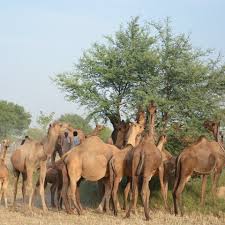
Highly Adapted Brela Camel of Pakistan
Camel is an Efficient Biological Machine
The camel produces in harsh environments where other animals are difficult to survive. In the climate change scenario, the camel is the most suitable animal to be used as an agent of food security. Camel relies on the marginal lands which are unable to produce crops or support agrifarming. Water is the major limiting factor of drylands and camel is the most efficient animal in the water economy (lowest water footprint). https://www.youtube.com/watch?v=r4h1E7WHKds
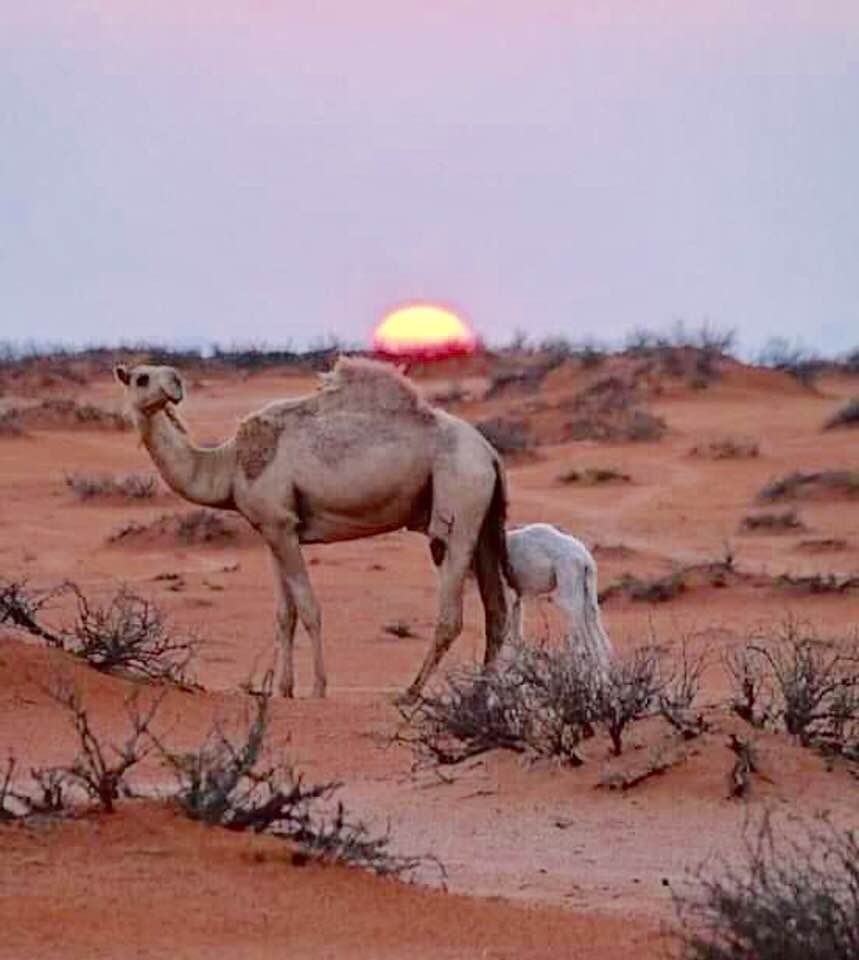
Camel is the beauty of the desert
Camel is Neglected
Unfortunately, camel is always neglected while formulating policies for food security under climate change context. Recently, the Australian government decided to kill camels for water conservation. One can just realize how stupid this act is as the camel is the solution, not a problem. I hereby share the link of a film, you will weep to see the massacre of camel shoot. https://www.youtube.com/watch?v=V61_07V1jC4
There are many reasons for this sad state of the situation, all are man-made. The bushfire in the Australian continent is not because of the camel but the soaring heat because of climate change.
Utilization is the Best Conservation
It is the utmost need of time to conserve camel with the perspectives of camel herders, climate scientists, and food security activists. But the top priority must go the camel keepers as they are one in all. Utilization is the best conservation. The Australian government should take the camel as an opportunity but not a threat. Camel milk (top priority) and meat can be good tools for its utilization and ultimately conservation.
<strong>Author: <a title=’Dr Abdul Raziq’ href=’http://www.articlesbase.com/authors/dr-abdul-raziq/825282′> Dr Abdul Raziq</a></strong><br /><p>Camel has adapted mechanisms that allow it to withstand prolonged water deprivation, high temperature, especially in the absence of readily available water, and survive when feed resources are scarce or of poor quality. Heat tolerance is in part due to its\’ ability to minimize water loss. The camel retort to hot arid conditions by reducing urine production, absorbed urine, sweating economically, by an increase body temperature and by the ‘storage\’ of CO2 and glucose in the muscles. Camels can survive up to 14 days without water and can tolerate water losses of up to 30 A camel may drink more than a third of its body weight as it rehydrates.</p> <p>In terms of actual water intake, camel drinks 200 to 220 L in 3-10 minutes. In other animals rehydration at these levels would lead to over hydration and possible death. The camel is able to do this as large amounts of water can be stored for up to 24 hours in the gut to avoid a rapid dilution of the blood. The camel\’s kidneys play a major role in the process of conserving water, having strong capacity of water reabsorption and excretion of very concentrated urine</p> <p>The camel\’s blood plays a principal role in adaptive mechanisms to high heat burden and dehydration as its composition and volume remains relatively constant and hemoglobin function remains normal. The erythrocytes of the camel are oval shaped and non-nucleated which resist osmotic variation without rupturing; these cells can swell to twice their initial volume following rehydration. Another unique feature of the erythrocytes is their long life span when the camel is dehydrated. The life span of the erythrocytes of hydrated camels is 90 to 120 days. When camels were chronically dehydrated during summer (40oC mean during day; 20oC mean at night) the life span of erythrocytes was extended to 150 days. Erythrocyte turnover is water and energy expensive. Therefore extending the life span of erythrocytes reduces energy and water expenditure</p> <p>A fully hydrated camel has a diurnal body temperature range of 36 to 38oC. However when dehydrated and exposed to high environmental heat load body temperature may fluctuate by 6 to 7oC, from approximately 34 to 41o C. The increase in body temperature of camels exposed to high heat load, especially following a 2o C reduction below the normal minimum, is advantageous because it allows a considerable amount of heat to be stored during the day and dissipated at night (by radiation) without the expenditure of water. Furthermore, as body temperature increases the temperature gradient between the camel and the external environment is reduced, and again water use is reduced. The camel has a bi-phasic air flow pattern, i.e. the inspiratory and expiratory flow rates through the nasal turbinate are similar. The bi-phasic breathing pattern also reduces water use.</p><p>Article Source: <a href=’http://www.articlesbase.com/environment-articles/camel-an-incredible-creature-in-difficult-environment-5703501.html’ title=’Camel, an incredible creature in difficult environment’>http://www.articlesbase.com/environment-articles/camel-an-incredible-creature-in-difficult-environment-5703501.html</a></p><strong>About the Author</strong><br /><p>Being the president of the Society of Animal, Vet. and Environmental Scientists (SAVES), I am working on the issues of dry lands and indigenous livestock breeds with respect to climate change scenario. Author had been working with the pastoral people for last 10 years, while characterizing and documenting livestock breeds and indigenous knowledge, especially related to camel. Ahthor had been delivering training to the livestock keepers in remote for vaccination, drenching and other valuable practices. I am the author of the indigenous livestock breeds, livestock production systems of the tribal people and indigenous knowledge in Balochistan province, Cholistan and Thar Desert of the Great Indian Desert. He had been traveling with the Afghan nomads (Kochis) to work and document on indigenous knowledge and livestock breeds/husbandry.</p> <p>Author organized camel scientists and herder in Pakistan and founded Camel Association of Pakistan. I am PhD in camel science and presented many international research presentations at various occasions.Dr Abdul Raziq had visited many countries and research stations.</p>