I. Introduction
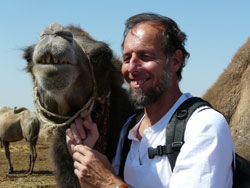
Camels are more than livestock—they are living legacies, silent witnesses to my journey and those of the pastoral families I have walked alongside. I often say: they don’t just provide milk—they offer healing and hope. Their patient steps across the dunes mirror our own perseverance. They remain, even in the harshest times, the desert’s pulse.
Today, that pulse is growing stronger across East Africa. In Kenya’s arid north, camels are becoming lifelines for communities where cows once reigned. A devastating three-year drought wiped out about 80% of cattle in Samburu County, driving the local government to distribute thousands of camels—animals that continue to produce milk through drought cycles and require far less water and grazing. This shift is more than practical—it’s transformative.(Le Monde.fr, The Washington Post)
The numbers tell a powerful story: Eastern Africa hosts approximately 13.7 million camels, with Kenya and Somalia leading the ranks—4.7 million and 7.2 million respectively.(PubMed Central, The Elephant) In Kenya’s arid counties—Mandera, Wajir, Garissa—the camel population is substantial, reflecting their rising role in pastoral economies and resilience-building.(PubMed Central)
In Somalia, where over 7 million camels roam, modernization is taking root. At Beder Camel Farm near Mogadishu, innovative care, better fodder, and hygienic milking have doubled milk output—now reaching 10 liters a day per camel, producing the country’s first camel-milk yogurt, and energizing both nutrition and local employment.(AP News)
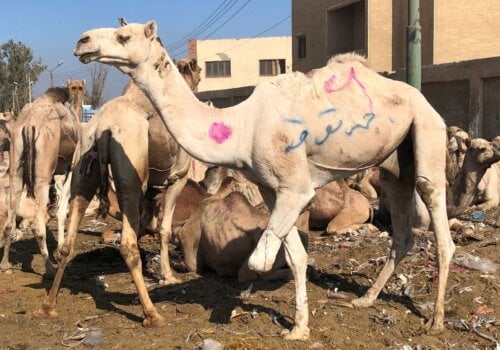
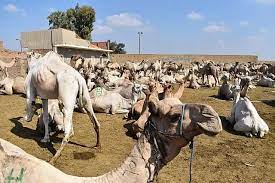
Yet, amid this rise lies a shadow: in Egypt’s transit markets—like Birqash and Daraw—camels endure escalating mistreatment during loading and unloading. Animal welfare organizations have poignantly documented exhaustion, injuries, and cruelty in these crossings, exposing the human cost hidden in tradition and informality.(AP News, FAOHome, The Elephant)
At this critical moment, the camel’s promise—of nutrition, adaptation, and heritage—stands at a crossroads. Without an integrated business model that honors animal welfare, fair income for herders, and modern food safety, we risk undermining the very backbone of resilience in this region. It’s time to design a model that responsibly cherishes these remarkable creatures and supports the people and communities who hold them dear.

II. The Toll: On Camels, People & Markets
- Camel Welfare: Across transit routes—from Somaliland to Egypt—camels endure dehydration, injury, and cruel treatment, including beatings meant to feign strength.
- Pastoralists: Herders bear financial, physical, and emotional burdens but rarely reap fair returns; illegal middlemen dominate profit margins.
- Consumers: Meat from stressed or abused camels can pose health risks; lack of transparency erodes trust.
This stark scenario is vividly portrayed in “March of the Camels – Where to Meet Akerlof’s Market for Lemons,” which spotlights hidden cruelty, market asymmetries, and the dire need for reform.
III. A Three-Pronged Business Model to Restore Balance
To transform the market, here’s a model grounded in compassion, fairness, and quality:
A. Humane Camel Welfare
- Certified Transport Standards: Integrate stopovers, water, shade, and veterinary oversight during transit.
- Welfare Labeling: Introduce the “Camel‑Kind” certification to visibly guarantee humane treatment and confer premium value.
B. Empowering Pastoralists
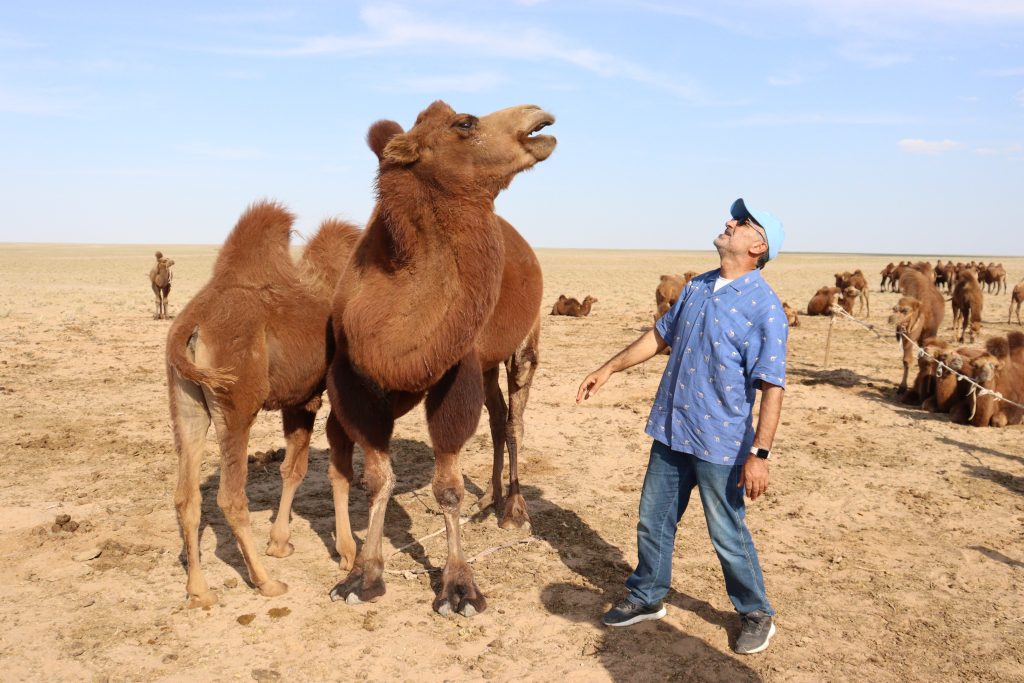
- Cooperative and Ethical Leasing Models: Allow pastoralists to lease their camels under fair contracts while retaining lived ownership—and shared income.
- Traceability & Health Certification: Engage local vets to validate animal health at origin.
- Financial Access: Facilitate mobile‑financed micro‑insurance, prepayments, and credit to buffer herders during hardship.

C. Consumer Rights & Market Integrity
- Cold-Chain Infrastructure: Build refrigerated hubs at production nodes and transit checkpoints.
- Transparent Branding: Offer “Pastoralist‑Fair Camel” products, emphasizing origin, ethics, and quality.
- Policy Synergy: Leverage emerging Somaliland/Somalia Dairy Acts and global welfare frameworks for standard alignment.
IV. Expected Benefits
| Stakeholder | Benefits |
|---|---|
| Camels | Improved health, reduced injury, and humane treatment |
| Herder Communities | Fair earnings, financial resilience, and recognition of their role |
| Consumers | Access to safer, higher-quality products with ethical assurance |
| Trade Systems | Greater transparency, resilience, and reputational integrity |
V. Call to Action
- To NGOs, Donors & Governments: Finance infrastructure (e.g., cold storage, cooperative training), mobile financial tools, and veterinary outreach.
- To Camel Advocates & Diaspora Entrepreneurs:Promote ethical camel brands, and invest in transparent, welfare-centered supply chains.
- To Consumers: Seek products marked with “Camel‑Kind” or “Pastoralist‑Fair Camel”, and demand humane, traceable sourcing.
VI. Conclusion
Camels are the desert’s gold—bearers of culture, resilience, and human survival in the Horn. It’s time their value is honored ethically: humane welfare for the animal, just returns for the herder, and trust for the consumer. Through a fair, welfare-centered model, we can ensure that all stakeholders—and the camel—benefit.
References
- From Sickness to Vitality through Camel Healing,” a personal narrative on camel milk’s transformative role on camel4all.info.
- Featured Article: March of the Camels—Where to Meet Akerlof’s Market for Lemons—framing the systemic failures and welfare issues in informal camel markets.
- Egypt-Le Passage Abuse Report: A report by Animals’ Angels documenting catastrophic camel transport conditions—including journeys of ~24 hours without food, water, or rest, followed by brutal unloading at Birqash Market. Exhaustion, injuries, and deaths are prevalent, with no legal welfare protections in place (Animals Angels).