
Camel and the Power of Adaptation
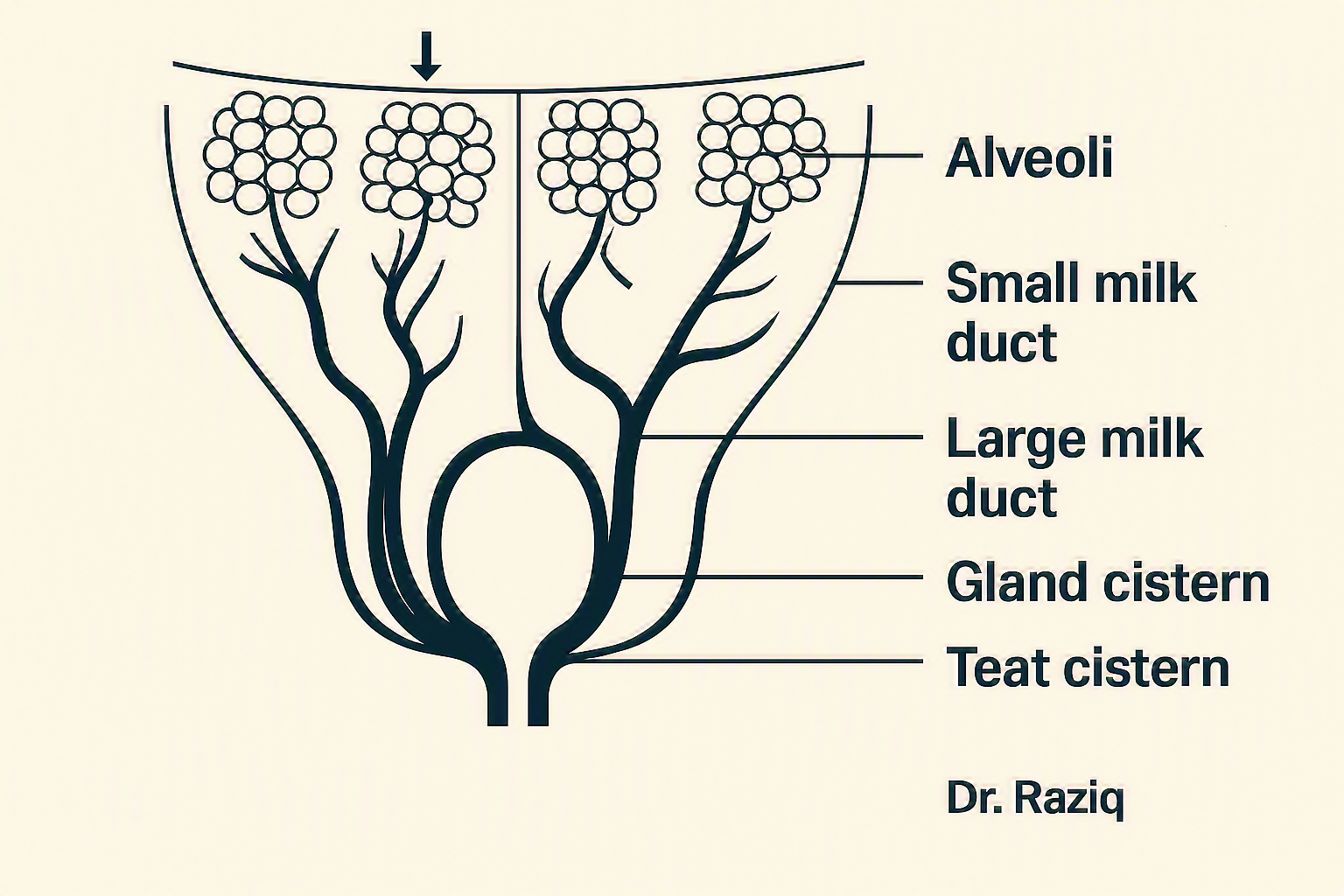
In a warming world where heat stress increasingly limits dairy productivity, camels clearly outperform cattle due to their superior mammary development under extreme environmental conditions. Unlike cows, whose mammary growth and epithelial cell proliferation are significantly compromised by heat stress, camels maintain functional mammary development even under dehydration and high temperatures. Their unique mammary architecture—characterized by extensive alveolar milk storage and oxytocin-dependent milk release—supports sustained lactation in harsh climates. Additionally, the camel’s longer gestation period, approximately 12 months, supports enhanced prenatal development, including stronger mammary tissue formation. Combined with efficient energy and protein metabolism, these traits enable camels to sustain milk production from low-quality feed, making them ideally suited for climate-hit regions where conventional dairy systems struggle.
Camel Better Copes with the Stressful Climatic Conditions
Beyond physiology, camels represent a practical and strategic solution for global food security under climate change. Their inherent resilience allows them to thrive under extensive and low-input systems, where cattle would experience declines in productivity. Unlike cows, camel lactation is less dependent on optimal environmental conditions and can continue even during water scarcity, demonstrating a unique biological adaptation. Furthermore, camel milk is highly nutritious and enriched with antimicrobial proteins such as lactoferrin, offering both health benefits and improved shelf stability. These advantages make camel dairying especially relevant for arid and semi-arid regions, where rising temperatures and water limitations threaten traditional livestock systems. As global warming intensifies, camels emerge not just as an alternative but as a reliable and sustainable dairy species for future generations.

Recent Findings Proved the Hypothesis
Recent findings from the Journal of Dairy Science further reinforce this perspective by highlighting the resilience of the camel mammary gland compared with that of bovines. The reviewed article emphasizes that while heat stress reduces mammary cell proliferation and milk yield in cows—and can even induce negative effects across future generations—camels demonstrate evolutionary adaptations that sustain lactation despite environmental stress. Their mammary system, dominated by alveolar storage and adaptive responses to dehydration, allows continued milk production under heat and water stress conditions. These scientific insights confirm that camels possess inherent physiological and cellular mechanisms that protect mammary development, making them more reliable dairy animals in a changing climate. Therefore, integrating camel-based dairy systems is not only a scientific recommendation but a necessity for ensuring long-term food and nutritional security in globally warmed regions.

Reference
Choudhary, R. K., Puniya, A. K., Choudhary, S., Zhao, F.-Q., McFadden, T. B., & Capuco, A. V. (2026).
Effects of environment and management on mammary development in dairy animals.
Journal of Dairy Science.
https://doi.org/10.3168/jds.2025-28142 [Mammary gl…nt article | PDF]
