

This article is a part of the series about the camel awareness program to celebrate World Camel Day on 22 June.
Nasal Turbinate System
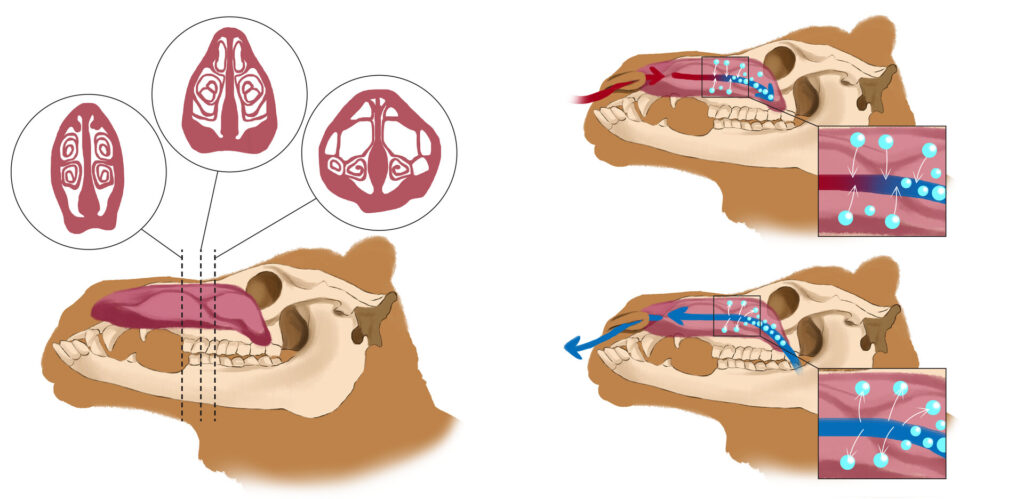
Camels possess a highly specialised nasal turbinate system that plays a central role in breathing efficiency and water conservation in desert environments. The turbinates are tightly scrolled, creating a large, moist surface area that cools and humidifies incoming hot desert air during inhalation. During exhalation, air is cooled in the nasal passages, causing moisture to condense and be reabsorbed via a countercurrent mechanism, significantly reducing respiratory water loss.

The bi‑phasic airflow pattern, where inspiratory and expiratory flow rates are nearly equal, further enhances efficiency. Any excess moisture not absorbed is drained through a cleft in the upper lip, a canal-like structure lined with countless fine hairs to minimise evaporation.
Brain Cooling System
In addition to nasal adaptations, camels maintain brain temperature through a remarkable vascular structure known as the rete mirabile. This network of closely packed arteries and veins functions via countercurrent heat exchange, in which cool venous blood returning from the nasal region cools warm arterial blood before it reaches the brain.
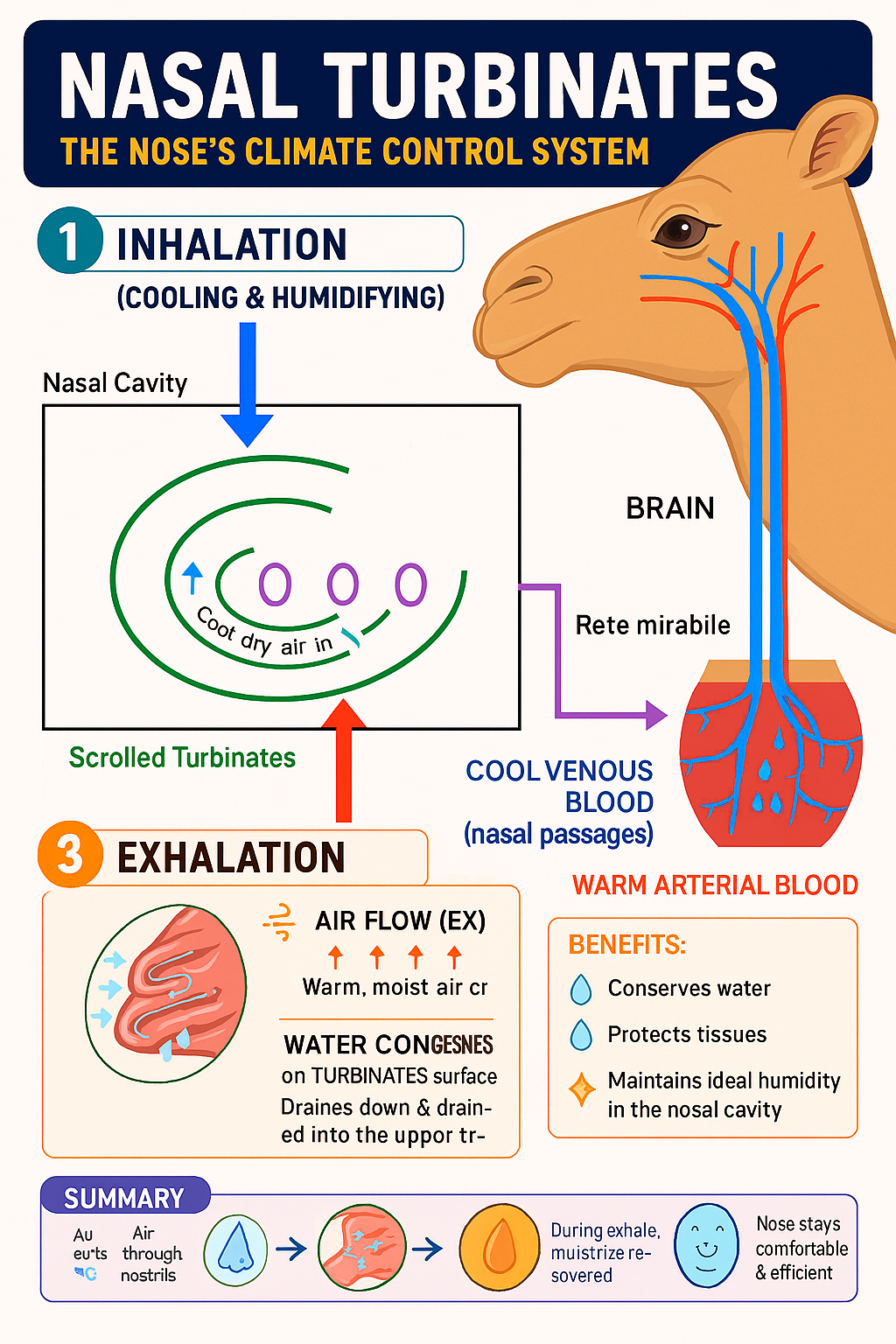
This mechanism prevents overheating under extreme desert conditions and reduces the need for excessive sweating, thus conserving body water. Together, the nasal turbinates, moisture recovery system, upper lip drainage adaptation, and rete mirabile demonstrate a highly integrated physiological design that ensures survival, efficiency, and resilience in harsh environments.
